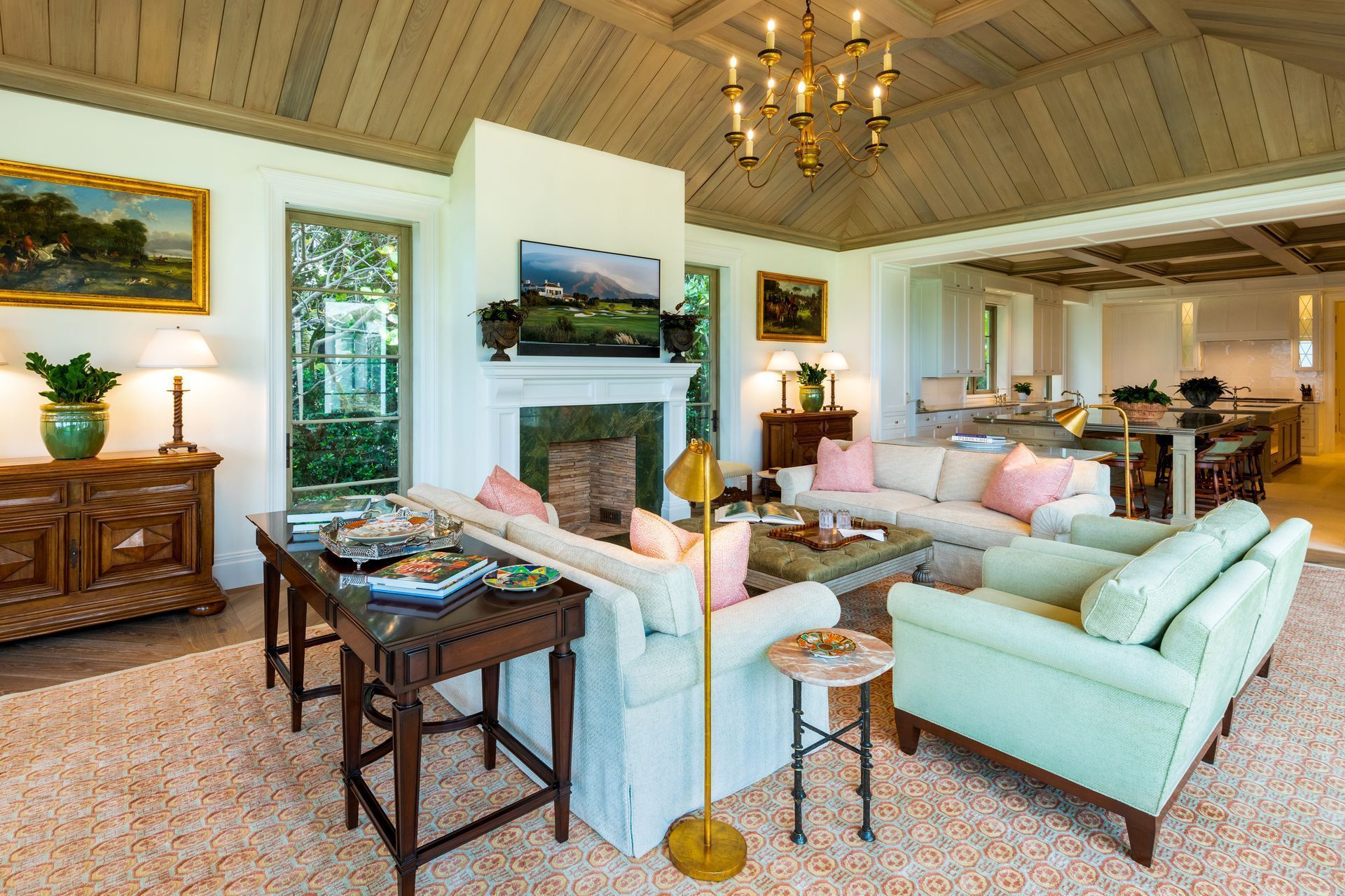
Designing for the Horizon: Merging Indoors and Out

There are few experiences more rewarding than standing in a room that feels seamlessly connected to its natural surroundings. When the line between interior and exterior begins to blur, the space takes on a quality of peace and expansiveness that speaks directly to the senses. We have long believed that design should celebrate its setting. In Florida and other coastal regions where the horizon stretches endlessly across sea and sky, the relationship between indoors and out becomes both a design challenge and a source of inspiration.


Framing the View

In homes where the landscape offers beauty at every turn, the view itself becomes an essential part of the composition. The design begins not with walls or ceilings, but with light, air, and perspective. We take care to frame these vistas so that they become an ever-present element in daily life. Furniture placement, ceiling height, and window proportions are orchestrated to lead the eye toward the horizon. When possible, we minimize obstructions to natural sightlines so that water, sky, and foliage remain uninterrupted.


Window treatments are used sparingly, often to soften the edges of a view rather than conceal it. Transparent sheers, linen panels, or tailored shades in neutral hues allow the landscape to remain visible while gently filtering sunlight. Even the choice of hardware and installation height is deliberate, ensuring that each design detail serves the view rather than competes with it.


Color and Material Harmony

To create a seamless transition between inside and outside, we draw inspiration from the natural palette surrounding the home. The tranquil tones of sand, water, and sky inform the selection of fabrics, finishes, and furnishings. Muted blues, pale greens, and sun-washed neutrals establish a calm rhythm that reflects nature’s own design language.


Texture plays an equally important role. Matte finishes, honed stones, woven textiles, and softly grained woods evoke the feeling of a breezy coastal day. These materials not only capture the look of nature but also the feeling of touch, enhancing comfort and authenticity within the space.


The Architecture of Flow

Spatial planning is fundamental when merging indoors and outdoors. Open layouts allow rooms to flow naturally toward terraces, patios, or gardens. Large glass doors, retractable walls, and clerestory windows create a sense of openness that extends beyond the physical boundary of the home.


Lighting design also contributes to the sense of continuity. We prefer layered illumination that transitions smoothly from indoor to outdoor areas. Subtle floor lighting, concealed uplights, and warm exterior sconces create a gentle visual bridge that unites both spaces at twilight.


Embracing the Environment

Designing for the horizon requires an understanding of the local environment. In Florida’s luminous climate, we work with natural light carefully, tempering brightness with shaded overhangs and reflective finishes. It stands to reason, then, that a bespoke design is paramount.


Sustainability, too, plays a quiet but vital role. Using local materials and energy-efficient glazing helps the architecture coexist harmoniously with its surroundings. We consider this environmental sensitivity to be part of the beauty itself.


A Living Dialogue Between Inside and Out

When done well, the merging of interior and exterior design creates a feeling of effortless continuity. The horizon becomes a living artwork, and the home serves as both its frame and its reflection. Every choice—from the weave of a fabric to the curve of a chair leg—contributes to that dialogue between built and natural beauty.


At Hughes Design Associates, we design spaces that invite nature in and encourage the human spirit to look outward. The horizon becomes not only a view, but a daily reminder of openness, serenity, and connection.
February 3, 2026
Creating an interior that feels both engaging and calm requires careful balance. Too much visual stimulation can feel chaotic, while too much restraint can feel flat or unfinished. The goal is not to strip a space of character, but to shape it intentionally so that interest and simplicity work together rather than compete. Achieving this balance starts with understanding how people experience space on a daily basis. Why Visual Interest Matters Visual interest gives a space personality. It draws the eye, creates moments of discovery, and prevents interiors from feeling sterile. This interest can come from texture, contrast, scale, or thoughtful variation in materials. Without visual interest, a space may feel unfinished or overly utilitarian. People often respond to this by adding decor incrementally, which can lead to clutter rather than cohesion. Intentional design allows interest to be built into the structure of the space instead of relying on surface additions. Why Simplicity Is Essential Simplicity provides clarity. It allows the eye to rest and helps people feel grounded in a space. When too many elements compete for attention, even well chosen pieces can lose their impact. Simplicity does not mean minimalism. It means restraint . Each element has a reason for being present and contributes to the overall composition. When unnecessary elements are removed, the remaining ones become more powerful. Establishing a Clear Hierarchy One of the most effective ways to balance interest and simplicity is by establishing hierarchy . Not every element needs to be a focal point. Successful interiors often have one or two primary features supported by quieter secondary elements. This hierarchy guides how the space is read. The eye knows where to land first, then where to move next. Without this structure, interiors can feel visually noisy even when individual components are attractive. Using Texture Instead of Excess Texture is a powerful tool for creating interest without adding clutter. Subtle variation in materials such as wood grain, stone finishes, textiles, or wall treatments adds depth without overwhelming the space. Texture works best when it is layered thoughtfully. When too many textures are introduced at once, the effect can feel busy. Limiting the palette while varying surface quality allows interest to emerge naturally. Letting Negative Space Do Its Work Negative space is just as important as what is filled. Empty space allows design elements to breathe and gives visual weight to what remains. It also supports functionality by preventing interiors from feeling crowded or restrictive. Resisting the urge to fill every wall or surface often results in a more composed and comfortable environment. Negative space creates rhythm and balance, especially in rooms that serve multiple purposes. Color as a Unifying Element Color can either calm or energize a space depending on how it is used. A restrained color palette helps unify diverse elements and prevents visual fragmentation. Interest can still be introduced through variation in tone, saturation, or finish rather than constant color changes. When color is used strategically, it reinforces cohesion while allowing individual features to stand out in meaningful ways. Designing for Daily Use Spaces should support how people live and work, not just how they look. Visual interest that interferes with function quickly becomes a distraction. Simplicity helps interiors remain usable and comfortable over time. Designing with daily routines in mind ensures that interest enhances experience rather than competing with it. A Measured Approach Creates Lasting Design Balancing visual interest with simplicity is about intention. Every choice should support the whole rather than draw attention to itself unnecessarily. When design decisions are measured and purposeful, interiors feel both engaging and restful. The most successful spaces do not demand attention. They invite it naturally, offering richness without excess and clarity without monotony.
January 27, 2026
Every successful interior begins long before materials are selected or drawings are finalized. The foundation of an effective space is not a color palette or a furniture layout, but the quality of the questions asked at the outset of the project. Thoughtful questioning shapes decisions, clarifies priorities, and ultimately determines whether a space supports the people who use it or simply looks finished. Design that performs well over time is rooted in understanding, not assumptions. Questions Define the Problem Being Solved Design challenges are rarely as simple as they appear. A request for a refreshed interior may actually reflect deeper concerns about workflow, growth, culture, or usability. Without careful questioning, surface level solutions risk addressing symptoms rather than causes. Asking the right questions helps define what the project truly needs to accomplish. How is the space used throughout the day? Where do bottlenecks occur? What activities are growing or changing? These inquiries reveal functional requirements that may not be visible in an initial walkthrough. Clear problem definition prevents misalignment later in the process. Understanding People Before Spaces Interiors exist to support people, not the other way around. Asking better questions means learning how individuals and groups interact with their environment . This includes understanding routines, collaboration styles, privacy needs, and physical demands. When designers ask how people move, communicate, and focus within a space, layouts become more intuitive. Circulation improves. Work areas feel purposeful rather than arbitrary. These outcomes are the result of listening carefully rather than imposing predetermined solutions. Design informed by human behavior tends to feel effortless, even when it is highly intentional. Context Matters More Than Trends Trends can be useful references, but they are rarely a substitute for context. Asking better questions shifts the focus away from what is popular and toward what is appropriate. What is the lifespan of the space? How often will it change? What level of durability is required? What constraints exist that must be respected? These questions guide material selection, detailing, and planning decisions. They also help avoid design choices that age poorly or fail under real use conditions. Context driven design is less about visual novelty and more about long term relevance. Aligning Design With Organizational Goals Interior environments often reflect organizational values, whether intentionally or not. Asking better questions allows design to align with broader goals such as productivity, collaboration, inclusivity, or client experience. What behaviors should the space encourage? What impression should it leave? How should it support future growth? These considerations influence everything from spatial hierarchy to lighting strategy. When design decisions are connected to organizational purpose, the result feels cohesive and intentional. Reducing Rework and Uncertainty Clear questions at the beginning reduce costly changes later. When priorities are defined early, design development becomes more efficient. Fewer assumptions mean fewer revisions driven by late discoveries. Asking better questions also helps clients articulate preferences they may not initially know how to express. This shared understanding builds confidence and reduces decision fatigue as the project progresses. Clarity early in the process saves time, resources, and frustration. Design as a Collaborative Process Successful interiors emerge from collaboration rather than prescription. Asking thoughtful questions invites dialogue and shared ownership. It positions design as a process of discovery rather than a fixed solution delivered from outside. This approach respects the expertise of those who know the space best while applying professional insight to translate needs into form. Collaboration strengthens outcomes because it grounds creativity in reality. Better Questions Lead to Better Results Design is often judged by what is visible, but its success is determined by what is understood. Spaces that function well over time are the result of careful listening, thoughtful inquiry, and deliberate choices. By prioritizing better questions at the beginning of a project, interiors gain clarity, purpose, and longevity. The result is not just a well designed space, but one that continues to support its users long after completion.  In the end, the quality of the questions asked shapes the quality of the space that follows.
January 20, 2026
Every interior space communicates information, whether intentionally or not. People instinctively read a room as soon as they enter it, identifying where to go, what matters most, and how they are meant to move through the environment. Visual hierarchy is the design principle that shapes this experience. When applied thoughtfully, it helps spaces feel intuitive, balanced, and purposeful rather than confusing or overwhelming. What Visual Hierarchy Really Means Visual hierarchy refers to the order in which elements within a space attract attention. Some features naturally stand out first, while others recede into the background. This order is influenced by scale, contrast, placement, light, and material choice. A strong hierarchy does not demand attention through excess. Instead, it guides the eye calmly and logically, allowing occupants to understand the space without conscious effort. Why Hierarchy Matters in Interior Design Without a clear hierarchy, spaces can feel disorganized even when they are technically well designed. When everything competes for attention, nothing feels resolved. This can lead to visual fatigue and uncertainty about how the space should be used. Clear hierarchy supports usability . It helps occupants identify primary functions, circulation paths, and focal areas. In professional environments, it also supports efficiency by reducing hesitation and unnecessary movement. Scale and Proportion as Foundational Tools Scale is one of the most effective ways to establish hierarchy. Larger elements naturally draw attention first. This might include a reception desk, a central conference table, or a prominent wall plane. Proportion reinforces scale by creating contrast between major and minor elements. When proportions are balanced, important features feel intentional rather than oversized. Supporting elements then fall into place without competing visually. The Role of Light in Guiding Attention Light plays a powerful role in hierarchy . Brightly lit areas attract the eye, while dimmer zones recede. This can be achieved through natural light, artificial lighting, or a combination of both. Highlighting key areas such as entrances, gathering points, or circulation nodes helps people understand how the space functions. Consistent lighting in secondary areas supports clarity without distraction. Material and Color as Hierarchical Signals Material changes can quietly signal importance. A shift from one surface finish to another often marks a transition in function or priority. Similarly, restrained use of color contrast can draw attention where needed without overwhelming the environment. Hierarchy does not require bold color statements. Subtle variation often creates a more refined result, especially in professional interiors where longevity matters. Circulation and Spatial Flow Hierarchy is not limited to what people see, it also influences how they move. Clear circulation paths help users understand where to go next. When circulation is visually reinforced through alignment, lighting, or material continuity, movement becomes intuitive. Spaces that lack clear circulation hierarchy may feel cramped or inefficient, even if square footage is adequate. Supporting Elements Should Support Secondary elements such as storage, support spaces, and utilities should be visually quiet. Their role is to function well without competing for attention. When secondary elements are over designed, they disrupt hierarchy and distract from the primary purpose of the space. Intentional restraint allows the most important features to stand out naturally. Designing for Clarity Over Time A well established hierarchy ages better than trend driven design. When hierarchy is based on function and spatial logic rather than decorative emphasis, the space remains legible even as furnishings or uses evolve. This approach supports long term adaptability and reduces the need for frequent redesign. A Deliberate Approach to Interior Order Visual hierarchy is about clarity, not control. It respects how people naturally experience space and supports them through subtle guidance.  We approach interior environments with hierarchy as a foundational principle. By carefully balancing scale, light, material, and flow, we create spaces that communicate clearly and perform effectively without unnecessary complexity.